Blog
Can a Lawyer Get a DUI Dropped? Or How People in Canada Try to Save Their Driver’s Licence and Reputation

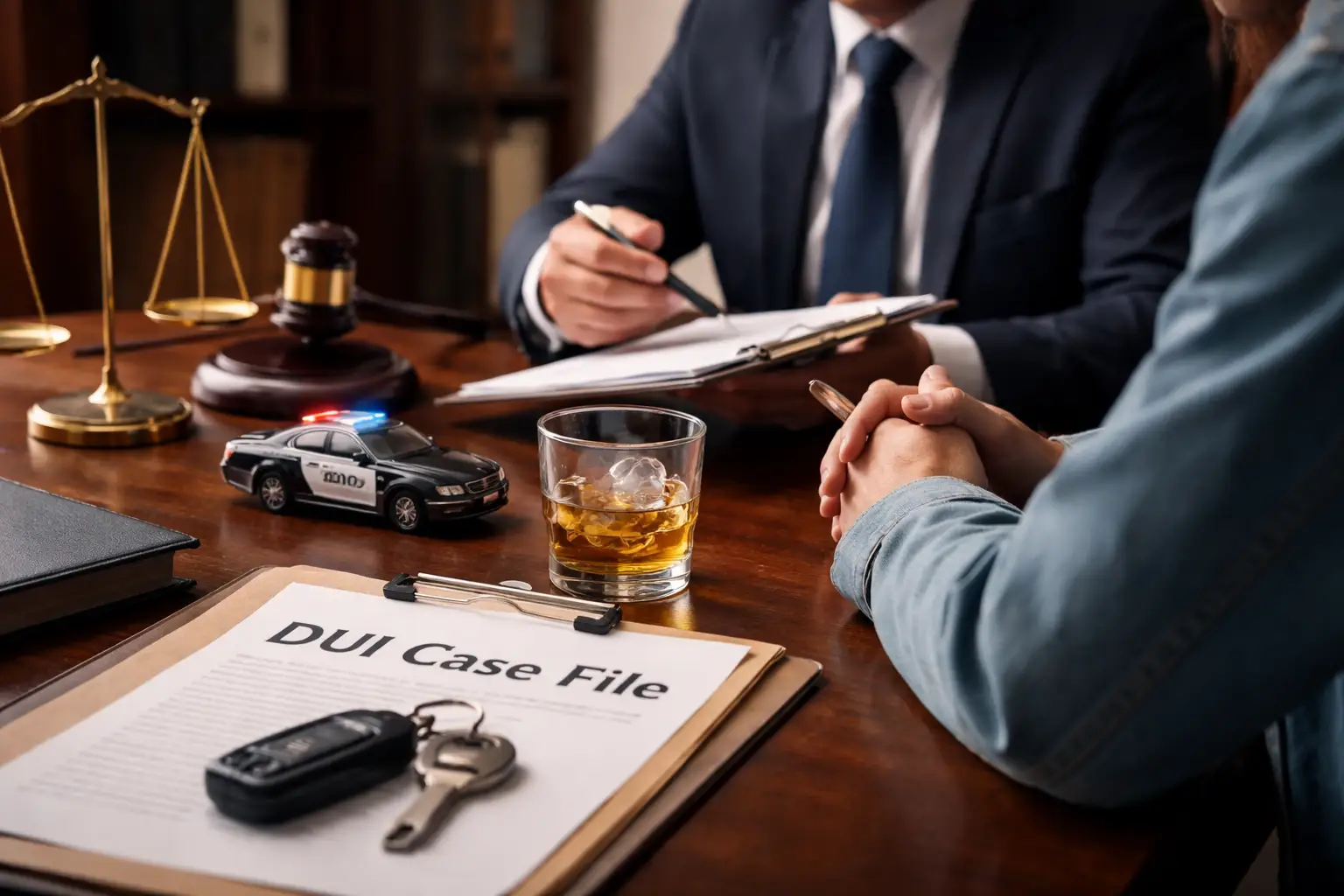
Picture this. A typical Canadian evening: hockey on TV, a couple of glasses of wine, “I’m totally fine,” a quick drive “to the store for chips” — and suddenly, flashing blue lights. A few minutes later, you’re already googling: can a lawyer get a DUI dropped?
The short answer: sometimes, yes.
The long answer: it depends on many factors — and that’s where things get interesting.
What DUI Means in Canada — and Why It’s No Joke
Let’s start with terminology. In Canada, you’ll usually see charges like:
- Impaired Driving
- Over 80 (blood alcohol over 80 mg per 100 ml of blood)
- Refusal to Comply (refusing a breath or blood test)
Since 2018, after changes to the Criminal Code, DUI laws have become much stricter. Police can now demand a breath sample without prior suspicion, and the consequences may include:
- hefty fines
- a driving prohibition
- a criminal record (yes, an actual criminal record)
- problems with immigration and employment
So the question “can a lawyer get a DUI dropped?” isn’t idle curiosity — it’s often a genuine attempt to protect one’s future.
What a DUI Lawyer Actually Does
Let’s clear up a common myth right away:
a lawyer doesn’t erase a DUI with a magic button or negotiate with the judge over maple syrup.
A DUI lawyer’s real job is to find procedural and evidentiary errors — and in DUI cases, they happen more often than people think.
A strong DUI lawyer Calgary will closely examine:
- whether the traffic stop was lawful
- whether your Charter of Rights and Freedoms were respected
- whether the breathalyzer was used correctly
- the timing and sequence of the tests
- police conduct before, during, and after the arrest
If even one link in that chain breaks, the entire case can fall apart.
Real Reasons Why DUI Charges Get Dropped in Canada
Now to the good stuff. Yes, DUI charges do sometimes get dropped. Here are the most common reasons.
1. Illegal Traffic Stop
If police had no lawful reason to stop the vehicle — and this can be proven — all evidence obtained afterward may be excluded.
Even in Canada, where police powers are broad, they are not unlimited.
2. Charter Rights Violations
For example:
- you weren’t informed of your right to a lawyer
- you weren’t given a reasonable opportunity to contact one
- the process was delayed without justification
Courts take these violations very seriously.
3. Breathalyzer Issues
A breathalyzer is not a magical artifact — it’s equipment that:
- must be regularly calibrated
- must be operated by a certified officer
- must be used strictly according to protocol
If the device malfunctioned or procedures weren’t followed, the results may be ruled unreliable.
4. Delayed Testing
By law, testing must be done as soon as reasonably possible after the stop. If too much time passes, the alcohol level may no longer reflect the driver’s condition at the time of driving.
And yes, the phrase “I drank after the stop” sometimes works. Sometimes.
5. Insufficient Evidence
The Crown must prove guilt beyond a reasonable doubt. If the evidence is weak, inconsistent, or incomplete, the charge may be withdrawn or reduced.
A common question comes up here: what if the driver was clearly drunk, somehow driving without obvious violations, got stopped anyway, and procedural errors occurred — could the case be dismissed?
Theoretically, yes. Practically speaking, when someone is driving in an outrageously intoxicated state — the kind where Pokémon seem to appear on the road — the answer is no. In such cases, punishment is almost inevitable.
That said, even then, a lawyer is essential. Procedural errors are surprisingly common, and they can still lead to reduced penalties.
Can a Lawyer Always Get a DUI Dropped? Spoiler: No
Honesty, no illusions:
if procedures were followed perfectly, the evidence is solid, and you were genuinely impaired — the chances are slim.
In those situations, a lawyer can still:
- negotiate reduced penalties
- help avoid jail time
- shorten the driving ban
- limit damage to immigration status or employment
Sometimes, that alone is a major win.
Why “I’ll Handle It Myself” Is a Bad Idea
A DUI in Canada is a criminal offence, not a parking ticket.
Self-representation often ends with:
- maximum fines
- long driving prohibitions
- a permanent criminal record
Prosecutors handle these cases daily. Judges see them every day. You’re dealing with it for the first time — stressed and overwhelmed. That’s like swimming in a pool full of hungry sharks while defending yourself with an inflatable beach ball and vague knowledge that you’re supposed to hit them on the nose. Interesting, but highly questionable.
A lawyer, on the other hand:
- knows local court practice
- understands which arguments work in your region
- knows how to negotiate with the Crown Prosecutor
Many clients tell their lawyer:
“I was sure I was okay.”
Canadian law responds:
“Confidence is not evidence.”
That’s why the best way to avoid a DUI is simple: don’t drive after drinking at all. Uber is cheaper. A lawyer costs more. A criminal record is priceless — in the worst possible way.
Final Verdict: Can a Lawyer Get a DUI Dropped in Canada?
In short:
- Yes, sometimes
- No, not always
- The sooner, the better
- Every case is unique
A DUI is not an automatic life sentence — but it’s far from trivial. In Canada, these cases are decided at the intersection of law, procedure, and tiny details most people would never notice.
That’s exactly where a lawyer earns their keep.